
Ideas
Personal care kits for life on the move
Build one compact kit for one routine, then choose a distribution channel that fits how it will be used.
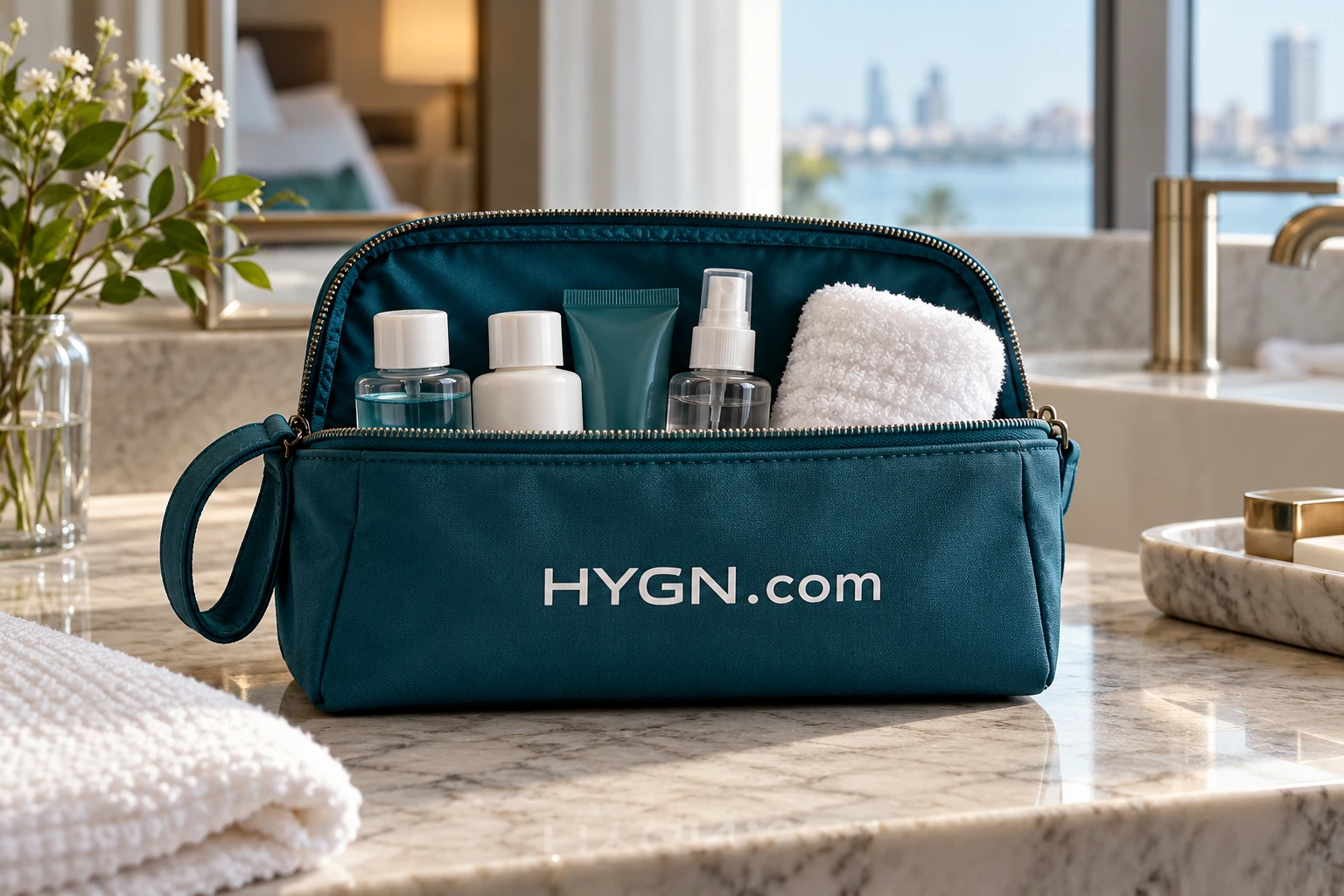
A travel kit earns its place by solving a packing problem. It may keep a gym routine together, replace the forgotten items in an overnight bag or make a short work trip easier to prepare for. Those are different jobs. Starting with one of them gives a founder a clearer way to choose the contents, pouch, price structure and first sales channel.
This is an illustrative product concept for HYGN.com, which is available for acquisition. It proposes a compact personal care kit with a defined use and a small initial assortment. No kit is currently offered through this website. Product sourcing, labeling, packaging suitability and any market-specific requirements would need to be resolved by the future operator before selling the concept.
Pick a trip people can describe
Choose a routine with a clear beginning and end. An after-work gym visit is useful because the customer knows what they carry, where they change and what needs to return home. An overnight business trip has a different packing context and purchase moment. Ask potential customers to unpack their existing bag and explain what gets forgotten, leaks or remains unused.
Listen for constraints rather than collecting a long wish list. Some customers already own products they prefer and need an organizer. Others want a complete set they can leave packed. These lead to different offers. A pouch with empty containers should be described and tested as that product; a filled personal care set brings additional supplier, formulation and labeling decisions.
Build the smallest complete version
For a gym-focused pilot, list the exact moments the kit supports: arrival, changing, showering if relevant and returning used items to the bag. Select only the contents needed for the chosen routine. A compact pack with three useful items can be easier to understand than a larger bundle filled with extras that increase weight and complicate replacement orders.
Make a physical sample with the intended contents, not stand-in objects of roughly the same size. Open every closure with damp hands during an appropriate product trial, test the pouch zipper and check whether the package can stand or hang where intended. Ask a few people to pack it inside their own bag. The shape of the complete kit matters as much as each individual item.
Decide what happens after the first use
A reusable kit needs a plan for empty, wet or damaged components. A customer may want to replace one bottle rather than buy the whole bundle again. Decide which components will remain available individually and how they will be identified. A simple product code on a care card can be more useful than a broad promise that everything is easy to replace.
If the kit uses refillable containers, obtain appropriate use and care instructions for the actual materials and intended products. Avoid suggesting that any formula can be decanted into any container. Compatibility and labeling need qualified attention. The commercial concept can stay flexible while the final product specifications remain precise about what each component is designed to hold.
Choose a channel before designing the box
A kit sold at a gym reception desk must explain itself in a few seconds and fit the space the manager can spare. A direct online order needs parcel protection, photographs that show scale and a clear list of contents. A corporate gifting order may need a different outer sleeve, longer lead time and a process for approving artwork. Treat these as separate channel requirements.
Start with one channel and build the offer around its buying moment. For example, a local gym pilot could use a small counter display and a sample customers can handle. Agree who owns the stock, how sales are reported and who deals with returns. A casual verbal arrangement can become confusing as soon as a component goes missing or a customer wants a replacement.
If the products will use retail barcodes, consult GS1 US barcode placement guidance while the outer packaging is still flexible. Barcode placement belongs in the packaging discussion before the final artwork is approved.
Work through the bundle economics
List landed product costs, pouch, outer packaging, assembly, quality checks, shipping and the channel's commercial terms. Include a realistic allowance for damaged components and customer support. Compare the cost of replacing one failed closure with replacing an entire kit. A low-cost component can create an expensive support problem if the bundle cannot be repaired or fulfilled in parts.
Build the first order quantity from what can be tested and sold through the chosen channel. A supplier's larger quantity discount is only one input. Cash tied up in a custom pouch, storage space and the risk of changing the contents after feedback belong in the decision too. Ask for separate quotes for standard components and custom finishes so the tradeoff is visible.
The FDA cosmetics labeling guide is a useful reference for a specialist reviewing a US cosmetic kit. Give that reviewer the actual contents and packaging arrangement so the review addresses the product being sold.
Give the range a clear naming system
HYGN.com could host the kit range, component guides and replacement ordering. The shortened hygiene association works well with a practical product description, such as a gym care kit or an overnight essentials kit. Product photography should show the contents laid out beside the pouch and the full packed size. Customers should not have to guess whether the pictured accessories are included.
Keep variation names tied to actual differences. A larger pouch, a different routine or a different set of contents deserves a clear explanation. Color alone should not carry an important product distinction. If the range later expands, preserve the names of replacement components so early customers can still find the parts they bought.
Learn from a kit that has been carried
Give the pilot enough time for repeated use. Ask customers what stayed in the pouch, what moved elsewhere and which item they replaced first. Watch for extra objects they add themselves; those may reveal a missing need, but they do not automatically belong in every kit. Review feedback alongside return reasons, assembly time and component availability.
The next step is a single channel-specific prototype with a complete contents list and a costed replenishment plan. Take it to a handful of likely customers and one potential stockist. Their practical questions should shape the second version. That produces a more useful foundation for a HYGN.com product business than launching several bundles before any one routine has been understood.
A direction in mind?
HYGN.com is available for acquisition. Introduce your plans to begin the conversation.
Inquire about HYGN.com